About Suzanne Schreve
“Central to my view of why we pursue therapy is an inherent longing to return to soul.
Although we might start with a desire and need to free ourselves from restricting patterns, inherent to soul is a deeper belonging, both within ourselves and within the larger ecology of life.”
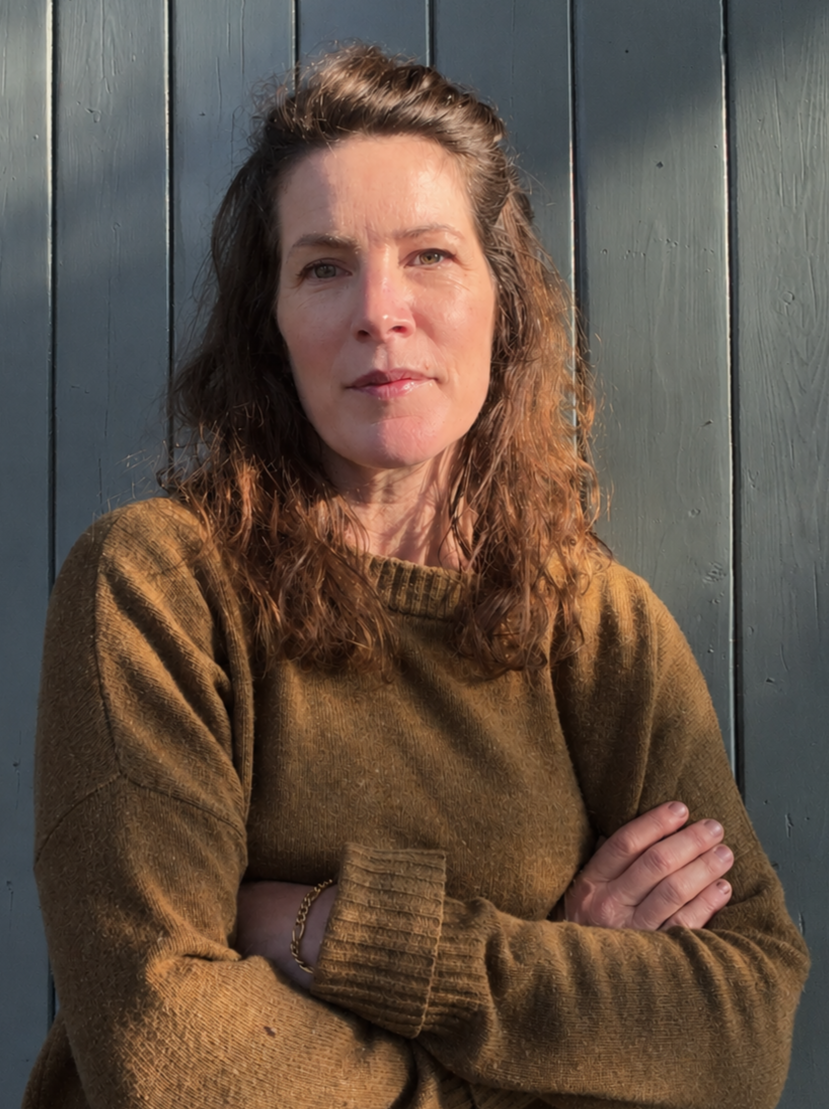
I am a Dutch certified and trained Jungian Psychoanalyst based in the Netherlands currently undertaking international training at the C.G. Jung Institute in Zürich, affiliated with the IAAP. I offer Jungian psychoanalysis in Dutch and English, online and in person in Vorden and Zutphen, working with women and men and with a particular focus on women moving through defining transitions in their lives. I also collaborate with artists, art collectives and institutions on art and the unconscious. In ongoing analysis, I work with the different layers of trauma.
Writing and collaboration
Alongside my clinical work, I write essays in which the mythopoetic, feminist eco-psychology, depth psychology, daily (practical) life and mystical experience meet. Through BlackSalt and my collaboration with Maison Douce in Hamburg, I also explore how art and storytelling can give form to and be an expression of movements within the collective psyche.
I live in the Dutch countryside with my family, among fruit trees, animals and the seasonal lives we are part of. The more-than-human world remains integral to how I understand psyche: as part of the larger field of relationship to which we belong.
Education and professional formation
Candidate at C.G. Jung Institute, Zürich, Zwitserland, IAAP affiliated
Jungian Psychoanalysis training, Two-year certificate, NAAP, IAAP affiliated
Three-year program in Jungian psychoanalysis, Jung Academie Amsterdam
PBSK training, Con Amore
MA Media Practice, University of Sydney, Australia
BSc Behavioural Neuroscience, University of Sussex, United Kingdom
Professional Biography
My work has grown at the meeting place of my interests and experience in (feminist/eco) psychology, mysticism and the mythopoetic. Across more than fifteen years of study, research and practice, I have remained interested in the same underlying question: how do body, psyche and world relate with one another, and what emerges when we (learn to) listen and respond in the recognition of a more-than-human reciprocity and kinship.
How the work began
From an early age, I was interested in the world within and around me. I observed the natural world and paid attention to the untold stories between humans, and the more-than-human world, although at that time I did not have any words for it. I sensed and followed a strong instinct that life was more animate, connected and mysterious than I could explain.
I studied Behavioural Neuroscience at the University of Sussex, where my interest centered particularly on ethology and the ways animals perceive, communicate and inhabit their worlds. I later completed an MA in Media at the University of Sydney to follow my passion for writing and worked as a part-time freelance journalist for five years.
I also entered the corporate world. An ensuing depression in my late twenties returned me back to my first great love, the living Earth. I learned the skills of wildlife documentary filmmaking with the intent to share the beauty and awe of nature.
Psyche, body and the immanent
Pregnancy and motherhood opened new spaces within me, both luminous and dark. During this period, I encountered Jungian psychology and a Sufi teacher within the same month; accompanied by bodywork, these traditions offered a language and container for new and existing experiences and ideas I had carried since childhood.
This brought me towards the study of the immanent principle in the psyche, oral storytelling and the relational nature of consciousness.
Research and analytic practice
I am particularly interested in forms of psychology that have relationship and relating as the starting point in which kinship and reciprocity in a more-than-human world have equal participation without dismissing the destructive patterns also inherent to relationship. My work is also inspired by ecological and biological/scientific principles that echo an inherent entanglement inclusive of autonomy.
This perspective informs the way I work. Body, imagination, feeling and thought are not treated as separate territories, while dreams and symbolic images remain connected to the concrete conditions of a person’s life. The immanent principle provides an important ground for this approach: receptive and relational, creative and active, and capable of being supported by clarity, discernment and structure.