Jungian Psychoanalsyis: Working with the Unconscious
People usually come to therapy because something has become painful, repetitive or impossible to carry in the old way. Alongside the wish to resolve a problem, there is often another movement: a deeper longing towards something we cannot yet fully name.
I offer Jungian psychoanalysis in English and Dutch, online and in person in Vorden and Zutphen. I work with women and men, with a particular focus on women between twentyfive and sixtyfive who are moving through defining transitions in their lives.
When the old way no longer holds
People come to analysis when familiar patterns keep returning, anxiety or depression persists, a relationship breaks open, or a transition disturbs an equilibrium that may have held for years. For women, this may happen around motherhood or an unfulfilled wish for a child, intimacy, separation, work, loss, or changes in the body and in the sense of who they are.
The immediate difficulty matters. So does the deeper question it may be carrying: what in us has been protected, silenced or left unlived, and what is now asking for our attention?
What is Jungian Psychoanalysis?
Jungian psychoanalysis takes the problems of everyday life seriously while remaining open to the deeper dimensions of the psyche. Rather than looking only at how a pattern can be changed, we become curious about why it arose, what purpose it may once have served, and what it might be telling us now. This does not mean that everything can—or needs to be—resolved. Part of psychological maturity lies in learning what asks for action and what asks to be carried differently.
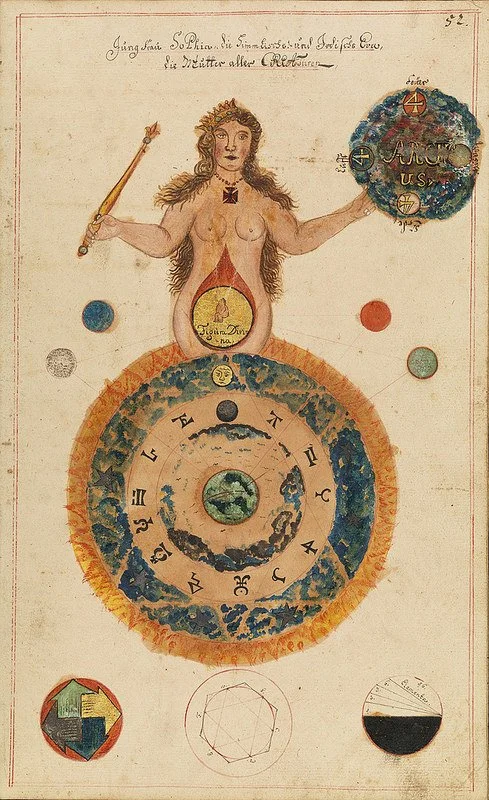
Imagine consciousness as a small boat moving upon a much larger sea. The boat is the world we know: our thoughts, intentions, choices and the story we tell about who we are. Beneath it lies a psyche far larger than what is available to conscious thought.
We encounter this unconscious life in dreams, bodily responses, images and fantasies; in the stories that move us and the patterns that keep returning. These are not instructions with one fixed meaning. We learn to stay with them, to notice their associations and emotional charge, and to listen for what begins to unfold around them. The question gradually changes from What is wrong with me? to What is happening within me, and what is it asking of me?

Sessions
Sessions last 50 minutes and usually take place every one or two weeks. I work in Dutch and English, in person at my practice in Vorden or Zutphen, and online via Zoom. A brief introductory call is available before an intake, so that you can ask practical questions and we can consider whether working together would be suitable.
“After engaging in several forms of therapy, my work with Suzanne was the first to reach the depth I had been seeking. Her Jungian approach is complemented by clarity, attentiveness and genuine care.”

A relational way of working
An important part of any therapeutic process is the relationship between client and analyst. Trust and safety create the vessel in which difficult experiences can be approached without being forced. Analysis is therefore not something done to a person, but a process shaped through attention, dialogue and the meeting of two inner worlds.
This relational way of working is central to the feminine principle that informs my practice. By the feminine, I do not mean a fixed image of how a woman should be. I mean a form of attention in both men and women that makes room for receptivity, embodiment, imagination and the cyclical nature of change. Relationship includes how we meet our bodies and inner lives, what feels strange or unfamiliar within us, the people around us and the more-than-human world of which we are part.
My work draws on more than fifteen years of combined experience, practice and research in behavioural neuroscience, ecology and Jungian psychology. This allows me to work with clinical clarity while remaining open to the symbolic and spiritual dimensions of the psyche. When we meet in person, Sandplay may sometimes complement analysis when an experience has not yet found words.
Read about Sandplay as part of an analytic process.
‘After years of orbiting the same issues, I found my way to a Jungian psychoanalyst. There, for the first time, I encountered the force of the unconscious—how it works on us, and how, when we learn to look toward it with attention, what has long seemed fixed can begin to change. I started to understand the deeper dynamics beneath my symptoms. I even became inspired by meeting my darkest parts—not because they were pleasant, but because I sensed that entering into dialogue with them could yield the answers I had been seeking. No one else could have given me those answers. They had to be discovered from within.’
“Tell me, what is it you plan to do
with your one wild and precious life?”
— Mary Oliver, A Summer Day.”
Frequently Asked Questions
-
Jungian analysis explores the conscious and unconscious aspects of your psyche, using dreams, images, and patterns in your life as guides. It aims to help you understand underlying dynamics rather than only addressing symptoms, supporting lasting change and deeper self-understanding.
-
No. Dreams can be a valuable entrance to the unconscious, but they are not required. We can also work with relationships, emotions, bodily responses, recurring situations, fantasies, images and the questions arising in your present life.
-
Yes. I work online with clients of different nationalities in Dutch and English. Sandplay itself is offered only in person and usually forms a complementary part of an analytic process.
-
If you are considering Jungian analysis, a brief introductory call offers space for your questions and for us both to sense whether working together would be appropriate. You do not need to arrive with a complete account of what is wrong. A first conversation can begin with what is most present now.
From the Library